
Joshua Tree National Park Itinerary: The Perfect 3-4 Day Guide
Looking for the ultimate Joshua Tree National Park Itinerary? We’ve got you covered! Joshua Tree National Park is located in Southern California, and we recommend 3-4 days exploring this national park. This is the perfect amount of time to see most of the attractions and hikes.
Spend a morning hiking to Ryan Mountain, one of the most popular hikes in the park. Then, visit the Hall of Horrors and Skull Rock. Finally, enjoy a fun hike and visit a unique miner’s boulder house in the remote wilderness of the park on your second day.
We visited Joshua Tree National Park as part of our spring break trip to Southern California. The weather at this time of year is perfect, and you can even pair a visit to Joshua Tree with Death Valley.
Read on for more details, because this is exactly how to plan your own Joshua Tree National Park itinerary, day by day.
This post may contain affiliate links, which means I’ll receive a commission if you purchase through my links, at no extra cost to you. Please read our full disclosure for more information.
Best Time to Visit Joshua Tree National Park
Spring is the best time to visit Joshua Tree. We visited in early April, which was perfect in every way. Here’s a quick seasonal breakdown:
Spring (March–May): Spring is the sweet spot for Joshua Tree and our top recommendation. Daytime temperatures are comfortable for hiking, typically 70°F-85°F. Wildflowers carpet the desert floor in a good rain year, and the Joshua Trees themselves are at their most photogenic against clear blue skies. Crowds are present but manageable if you arrive at the trailheads early. This is the window when the desert is fully alive, and the hiking is spectacular.
Summer (June–August): Approach with extreme caution! Summer at Joshua Tree is no joke. Daytime temperatures regularly exceed 100°F, and the exposed desert terrain offers almost no shade whatsoever. The park does not close in summer, but heat-related emergencies are common, and the NPS strongly discourages strenuous hiking between 10 am and 4 pm. If summer is your only option, get out before 9 am and stick to shorter, shadier trails. It’s really best to plan for spring or fall instead.
Fall (September–November): Fall brings similar temperatures to spring and is an excellent alternative if spring dates don’t work for your schedule. September can still be warm with temperatures in the low 90s. By October, the desert cools off and the crowds thin out after Labor Day. The light in October and November is spectacular for photography, especially at sunrise and sunset when the granite boulders glow orange and gold.
Winter (December–February): Winter is Joshua Tree’s least crowded season and offers a completely different experience from the rest of the year. Daytime temperatures are mild and pleasant for hiking, typically around 50°F-65°F. Nights can drop below freezing, especially at higher elevations in the park. Snow occasionally dusts the Joshua Trees and boulders, which would be really cool!
One note regardless of season: Always carry more water than you think you need. The desert dehydrates you faster than almost any other environment, and the NPS recommends a minimum of one liter per hour of hiking. There are no water sources on any trail in Joshua Tree. Fill up at the visitor center before every hike without exception. To be sure you never run out, check out our favorite water bladder here.
Joshua Tree National Park Itinerary At A Glance
Here is a quick table with an overview of what your Joshua Tree National Park itinerary could look like. For our recommendations on exactly where to stay, keep reading.
| Day 1 – Travel Day: Fly in and drive to Joshua Tree National Park | Rest in Joshua Tree, CA |
| Day 2 – Ryan Mountain hike, Hall of Horrors, Skull Rock | Rest in Joshua Tree, CA |
| Day 3 – Desert Queen Mine and Eagle Cliff Boulder House, Keys View, Travel to Death Valley. | Rest in Joshua Tree, CA or Beatty, NV. |
| Day 4 – Alternate Travel Day Home or to Death Valley | Travel Day |
| Closest Airports | Palm Springs International Airport – 1 hour Ontario International Airport – 1 hour 30 minutes Los Angeles International Airport – 3 hours |
The map above includes a day-by-day itinerary at Joshua Tree National Park. Sometimes it helps to see a visual overview and a map to help plan your route and adventures while visiting the park.
Planning Your Joshua Tree National Park Itinerary
Getting There
The closest airport to Joshua Tree is Palm Springs International Airport (PSP). Fly right into the action and start your trip just about an hour away from the west entrance. If you want to save some time driving into the area, this is the perfect airport, but it might be more expensive than others.
Ontario International Airport (ONT) is worth checking if you can find a good fare because it’s about 1.5 hours from the west entrance of the park and significantly less busy than Los Angeles International Airport, though it does have fewer direct flight options. Fly in here for less LA traffic hassles.
Los Angeles International Airport (LAX) is the biggest airport nearby with the most options for travelers flying into the area. However, the traffic associated with this airport will give you a travel headache! It might be cheaper, but you might sit in traffic for hours on your way to Joshua Tree.
Rental Car
A rental car is essential. Book your rental car early, especially for spring travel to Joshua Tree National Park. Compare prices at Booking.com or Expedia and lock in your car the moment your dates are confirmed.
We typically reserve our rental car well in advance using a pay-later option. This lets you keep an eye on prices leading up to your trip. If the rate drops, you can cancel for free and rebook at the lower price. Most major rental car companies offer free cancellation on pay-later reservations, but it’s always smart to double-check the fine print.
Make sure to take a video of the outside AND inside of the car before you leave the rental car lot. This will save you from any damage claims made by the rental car company after your return. We know from a very bad experience on this! Check out our post for more information on rental cars and what not to do.

Entrance & Fees
Joshua Tree National Park charges an entrance fee. If you’re visiting multiple national parks in the same year, the America the Beautiful Pass covers all of them. Pick one up on our gear page at REI before you leave home and save yourself some time at the entrance.
Joshua Tree National Park has three main entrances, each offering a different starting point. The West Entrance, near Joshua Tree, is the most popular and provides quick access to iconic areas like Hidden Valley and Keys View.
The North Entrance, near Twentynine Palms, is a convenient gateway to the park’s northern attractions and is often less busy.
The South Entrance, along Interstate 10 near Cottonwood, is the best choice for travelers approaching from Palm Springs or Phoenix and offers access to the park’s desert landscapes and Cottonwood Visitor Center.
Food & Gas
There is NO food or gas available in Joshua Tree National Park. Plan ahead! When using the west entrance of the park, there are plenty of options available right near the Joshua Tree National Park Visitor Center.
🚗 Check prices and options for rental cars at Expedia or Booking.com. Book now!
Cell Service
Coverage is very spotty to non-existent, so plan ahead here as well. You might get some signal on Ryan Mountain, but mostly everywhere else is a dead zone, so plan on downloading offline maps or using the map that you receive at the entrance station.
🏡 Get ready for your stay near Joshua Tree. Find a place to stay on VRBO now.
Day 1 – Travel & Drive To Joshua Tree
Your first day on this itinerary is a travel day to get to Joshua Tree. Depending on where you fly in, you may have a quick 1-hour drive, or a longer drive up to 2-3 hours. We recommend using this day to settle in and get some supplies for your trip.
When you get to Palm Springs or Joshua Tree, CA, there are some options here to get some groceries and prepare for your trip into the park the following day. If you’re looking for a fun and unique place to eat near Joshua Tree, CA, check out Pioneertown and the Red Dog Saloon.
Pioneertown is a quirky Old West-style town, originally built in the 1940s as a movie set.
Day 2 – Ryan Mountain, Hall of Horrors, Skull Rock

Hit the trails on day 2 of your trip to Joshua Tree. First up, plan to get to the park and the trailheads as early as you can, especially if you are traveling here during the spring months. Some of the parking areas are fairly small, and they fill up quickly! First up is Ryan Mountain.
Ryan Mountain

Ryan Mountain is one of the most popular hikes in the park and for good reason. It has sweeping views of the surrounding area at the summit! The hike is about 3 miles round trip, but has about 1,000 ft. of elevation gain.
That might not seem like a lot, but 1,000 feet in 1.5 miles can get fairly steep. Take your time, enjoy the views, and get ready for lots of stairs.
Hall of Horrors
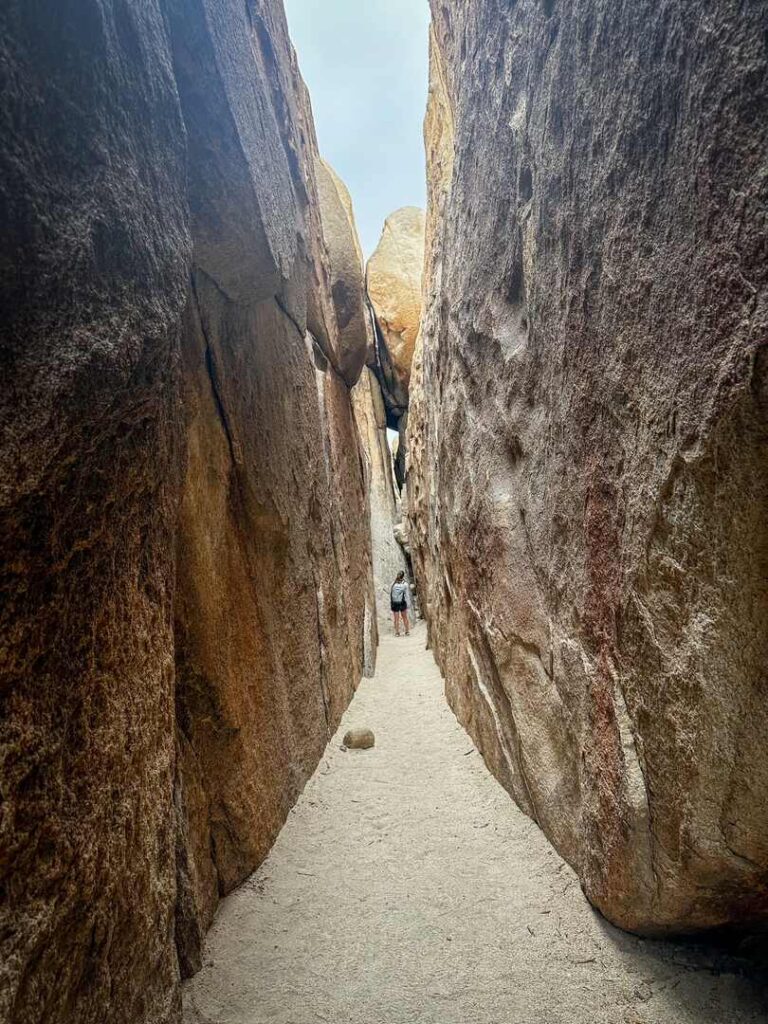
Located right near the Ryan Mountain hike is the Hall of Horrors. After you finish up the hike to Ryan Mountain, we recommend heading here next. When you arrive, head into the desert and use one of the many trails that zig-zag throughout the desert.
This is a fun place for some rock scrambling and rock climbing. If you head around the first rock pile, the second rock pile has some slot canyons that you can explore. Be careful here as some of the rocks can be slippery and the passages are tight.
Skull Rock
Finally, the last thing to do on your agenda is a visit to Skull Rock. Okay, now this is probably the MOST popular thing to see in Joshua Tree National Park, and everyone knows it. This area will likely be super busy. If you can find parking nearby, that is great. The rock is located right near the road.

However, if you are up for more hiking, we recommend parking on the opposite side of Skull Rock, a little farther down the road near the Jumbo Rocks Campground. From here, you can walk through the campground using the Skull Rock Nature Trail. The trail makes a nice loop. It’s 1.8 miles with minimal elevation gain.
Other Hikes

If you are a super-fast hiker and are looking for more things to do to finish out your day in the park, here are some recommendations that we also did while visiting Joshua Tree. Note that the only issue you may have with these is finding parking!
- Arch Rock and Heart Rock – 1.3 miles out and back – This short hike packs a lot of classic Joshua Tree scenery into a relatively easy walk. The trail winds through a rocky landscape to Arch Rock, a natural granite arch tucked among the boulders. Along the way, you can also look for Heart Rock, a naturally heart-shaped formation that makes for a fun photo stop.
- Barker Dam Nature Trail – 1.3-mile loop – The Barker Dam Nature Trail offers a little bit of everything Joshua Tree is known for, from towering rock formations and Joshua trees to the chance to see a historic water catchment built by early ranchers. The loop is short and scenic, with plenty of interesting geology and desert scenery along the way. After rain, the dam can also hold water, adding another layer to the landscape.
- Wall Street Mill Trail – 2 miles out and back – For a glimpse into Joshua Tree’s mining and ranching history, the Wall Street Mill Trail is a great choice. The relatively flat trail leads through the desert to the remains of an old gold mill, with historic equipment and structures scattered along the route. It’s an easy way to combine the park’s rugged scenery with a look at the people who once lived and worked here.
- Cholla Cactus Garden – 0.2-mile loop – The Cholla Cactus Garden is less of a hike and more of a quick, unforgettable walk through one of Joshua Tree’s most unusual landscapes. A short loop winds through a dense concentration of teddy bear cholla, whose fuzzy-looking appearance is surprisingly deceptive. The cacti glow beautifully in the early morning or late afternoon light, making this an especially worthwhile stop if you love photography.
- Ryan Ranch – 1.1 miles out and back – This is a fun and flat trek throught the sandy desert to the old ruins of Ryan Ranch. The adobe house dates back to 1896. Explore the old grounds of the ranch and see what other reminants you can find. Surrounded by Joshua trees, rugged boulders, and views of Ryan Mountain, this is a great trail for everyone!
Day 3 – Desert Queen Mine and Eagle Cliff Boulder House, Keys View
Day 3 at Joshua Tree National Park is your last day of exploration. We recommend hitting the trails early again and completing our favorite hike, Desert Queen Mine and Eagle Cliff Boulder House. Then, finish off your Joshua Tree National Park itinerary with a final stop at Keys View before making your way back to the airport.
Now wait a second here. Why not extend your spring break trip a few days, right? There is one park that you MUST visit in the spring, and it’s only 4 hours away: Death Valley! More on that coming soon.
🛌🏽 Ready to book your stay? Check out the places in Joshua Tree, CA on Expedia now.
Desert Queen Mine and Eagle Cliff Boulder House
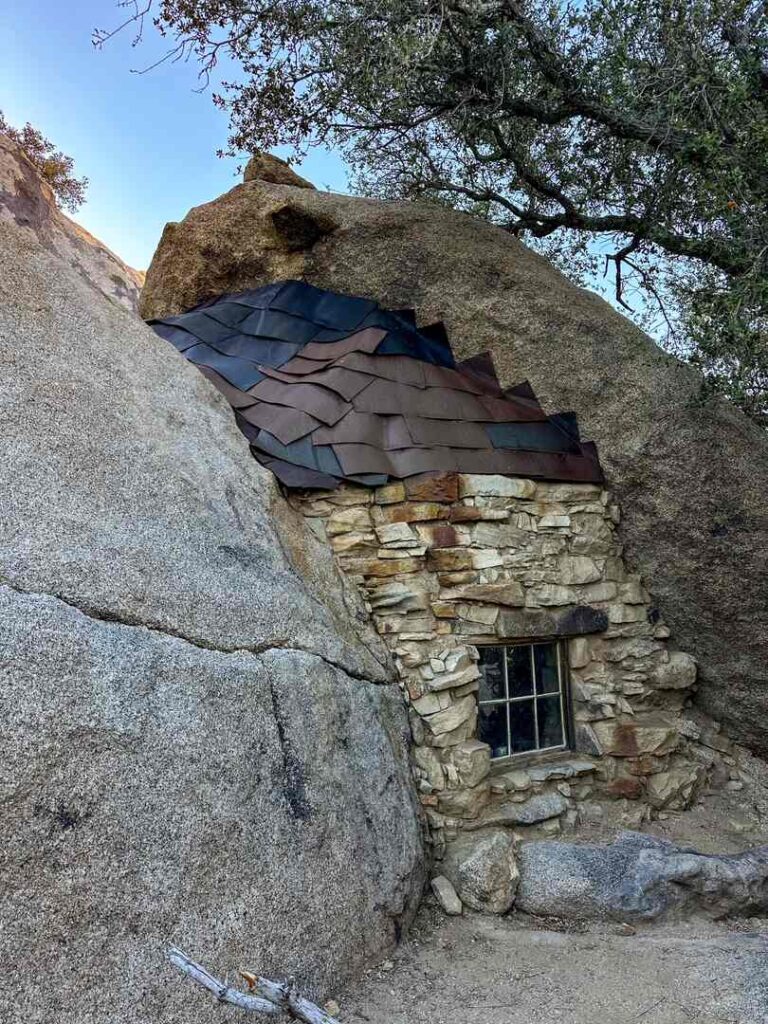
People ask us what our favorite hike in Joshua Tree is, and this is it! Starting at the Pine City Trailhead Parking Area, head out and explore a wilderness trail where you’ll see an old mine, spectacular views, and end at an old miner’s cabin that is literally built into the rocks! This trail is 3.5-4 miles out and back with 400 ft of elevation gain. It really is a perfect morning hike.
As you hike, be on the lookout for the entrances of old mines (that are now blocked off). When you reach the end, the miner’s cabin is so cool! You’ll see an old cooking stove, pots and pans, wooden shelves, old jars and cans, a window, and most of the roof is still intact.
Please note that the road to this trailhead is not paved and is mostly packed sand. You will likely be fine in a low-clearance vehicle, but you may want to reserve an SUV just in case. There are only a few spots for cars here, so make this the first stop of your day.
Keys View
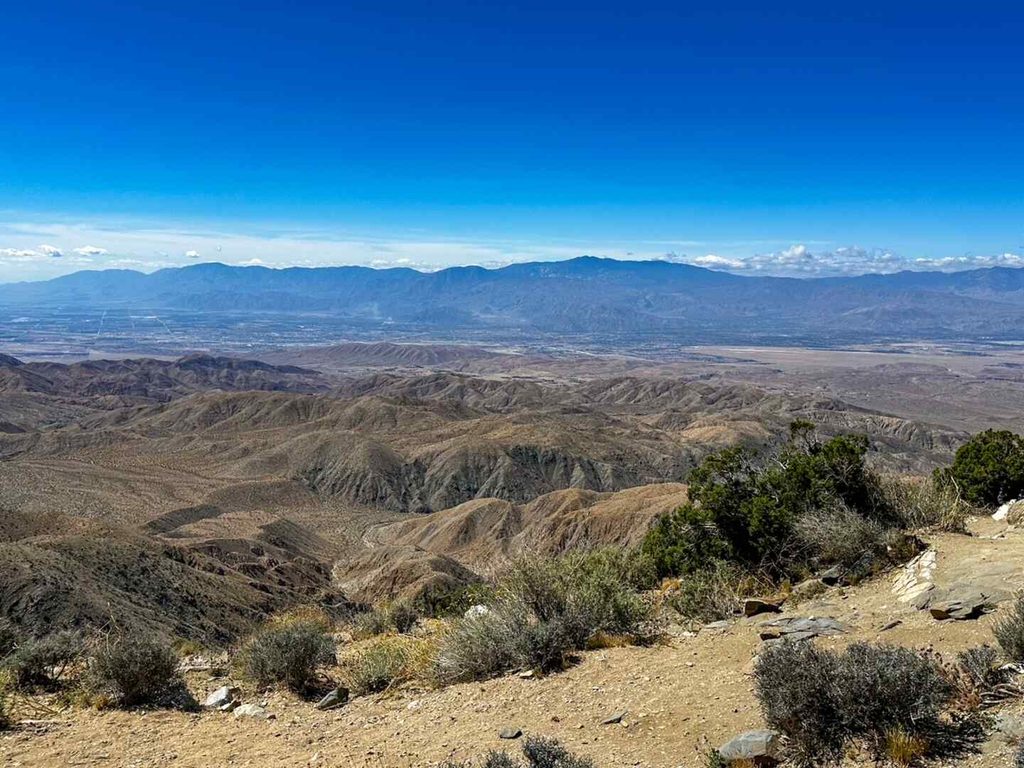
After a morning hike to the Eagle Cliff Boulder House, check out Keys View. Keys View is a spectacular overlook in Joshua Tree National Park, offering wide views across the Coachella Valley and surrounding desert mountains.
Perched high in the Little San Bernardino Mountains, it’s a peaceful place to watch the landscape stretch toward the horizon, especially around sunrise or sunset. On exceptionally clear days, the distant Salton Sea may even be visible.
Optional: Drive to Death Valley
Looking for more spring break fun? Death Valley National Park is only a 4-hour drive from Joshua Tree National Park! We spent a week in the area exploring these two parks and a few state parks near Las Vegas.
We recommend driving to Death Valley at the end of Day 3. This will put you in a great position to start exploring Death Valley National Park for a few days before heading home.
Joshua Tree National Park: Where To Stay
When visiting Joshua Tree National Park, we recommend staying near the west entrance. This is located right near one of the visitor centers, and there are plenty of options and amenities. It’s a quick drive into the park.
- VRBO – our top pick for a stay near Joshua Tree National Park. Find a place to stay now.
- The Bungalows by Homestead Modern at The Joshua Tree Retreat Center – complete with a restaurant on site, a pool, and games. Book your stay on Expedia.
- Sacred Sands – a quiet desert hideaway known for its intimate setting and thoughtfully designed spaces. Slow down and enjoy the rugged beauty of Joshua Tree. Reserve a room now.
- Field Station Joshua Tree – experience the desert while staying close to Joshua Tree National Park with comfortable, modern accommodations. Check out the options on Expedia.
Frequently Asked Questions
How many days do you need at Joshua Tree National Park?
Two full days is enough to hit the highlights, including Ryan Mountain, Hall of Horrors, Skull Rock, and our personal favorite hike to the Desert Queen Mine and Eagle Cliff Boulder House. Add a travel day on each end, and you’re looking at a 4-day trip total. If you can swing a week in CA, Death Valley is just 4 hours away and makes a perfect add-on, especially in spring when both parks are at their best.
What is the best hike in Joshua Tree National Park?
Desert Queen Mine and Eagle Cliff Boulder House. Most visitors skip this one entirely because it requires a short drive on an unpaved road to the Pine City Trailhead, but that’s exactly what makes it special. At around 4 miles out and back, you’ll pass blocked-off mine entrances, get sweeping wilderness views, and end at an old miner’s cabin built directly into the rocks. Complete with a cooking stove, wooden shelves, and most of the roof still intact, it’s the kind of hike that makes you feel like you discovered something. Get there first thing in the morning since parking is very limited.
Is Skull Rock worth visiting at Joshua Tree National Park?
Yes, but go in with realistic expectations. Skull Rock is genuinely cool and the most recognizable formation in the park, but it’s also the most visited spot by a huge margin. If you want to avoid the crowds, skip the roadside parking and instead park near Jumbo Rocks Campground and walk in via the Skull Rock Nature Trail. The 1.8-mile loop gives you the same great views of the rock with a much more enjoyable approach, and you’ll actually be able to enjoy it rather than fighting for a parking spot right nearby.
Which airport should you fly into for Joshua Tree National Park?
Palm Springs International Airport is the closest at about 1 hour from the park’s west entrance. Though it is convenient and straightforward, fares can be higher than larger nearby airports. Ontario International Airport is worth checking for better prices at about 1.5 hours away with far less traffic than Los Angeles. We’d avoid LAX unless the fare difference is significant. The traffic leaving the greater LA area can add hours to what should be a simple drive and is not a fun way to start a national park trip. Don’t forget about Las Vegas too, if you are pairing this with Death Valley.
Is there food or gas inside Joshua Tree National Park?
No, and this catches more visitors off guard than almost anything else about the park. There is no food and no gas anywhere inside Joshua Tree. Stock up before you enter. When using the west entrance, there are grocery stores and gas stations near the Joshua Tree National Park Visitor Center. Download offline maps before you enter as well, since cell service is essentially nonexistent throughout most of the park. Treat every visit like you’re heading somewhere truly remote, because you are.
Is a Visit To Joshua Tree National Park Worth It?

Yes! Of course it is. We visited Joshua Tree as part of our spring break trip through Southern California and Nevada in 2026. The weather was perfect, and the crowds were huge. That being said, we had no trouble hiking and exploring the park by showing up early.
The two hikes we loved the most were Ryan Mountain and Desert Queen Mine to Eagle Cliff Boulder House. Ryan Mountain was a quintessential hike that you really can’t miss. Heading up the mountain to some excellent views was a great way to spend a morning.
Desert Queen Mine to Eagle Cliff Boulder House was the most fun hike we did! If you are looking for some solitude and some wilderness hiking, this is the hike for you. We went early and really had the trail to ourselves. Getting to see the Eagle Cliff Boulder House was also really cool and was a great example of the history of this area.
We know your Joshua Tree itinerary might look a little bit different, but we hope this guide helps you plan an epic trip of your own.
🛌🏽 Don’t forget to check out Expedia and book your hotels, and if you like this itinerary, check out some of our other ones here!
Don’t forget to pin this post for future planning! Just click the save button located on any image.