The Ultimate Death Valley National Park Itinerary
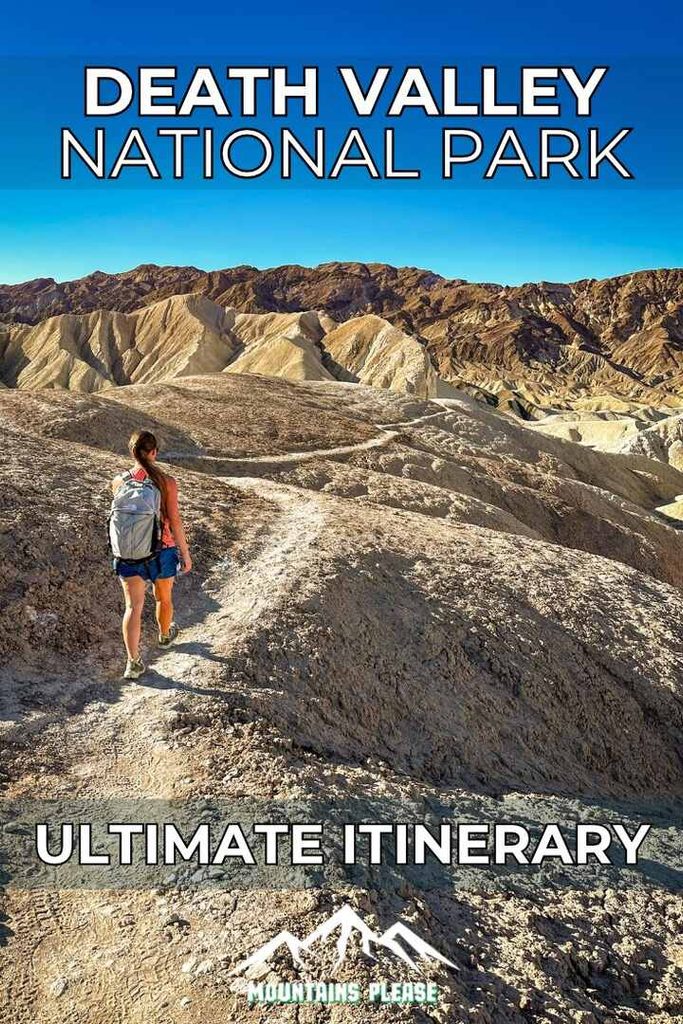
Looking for the ultimate Death Valley National Park Itinerary? Here it is! Death Valley National Park is located in Southern California and really can’t be missed. The scenery and uniqueness of the park blew us away!
We recommend spending 5 days exploring. Cross the salt in Badwater Basin, hike through multiple slot canyons, and visit the colorful Artist’s Palette and Golden Canyon. In addition, you can’t miss the Mesquite Flat Sand Dunes, a giant crater, and a panoramic scene high above the park at Dante’s View.
Sounds pretty epic, right? We visited Death Valley National Park as part of our spring break trip to Southern California. The weather in the spring is perfect, and you can even pair a visit to Death Valley right along with Joshua Tree.
Get all the important details below, because this park can become unsafe if it’s too hot. Here is exactly how to plan your Death Valley National Park itinerary, day by day.
This post may contain affiliate links, which means I’ll receive a commission if you purchase through my links, at no extra cost to you. Please read our full disclosure for more information.
Best Time to Visit Death Valley National Park
We think that spring is the best time to visit Death Valley. It’s busy, but worth it! We visited in early April, which was perfect in every way. Our second pick would be the fall months. Here’s a quick seasonal breakdown:
Spring (March–May): Beautiful but crowded. Spring is Death Valley’s peak tourist season, and for understandable reasons. Wildflower season in a good rain year transforms the valley floor into something almost impossible to believe. Temperatures are comfortable for hiking in March and early April, typically 75°F-90°F, before climbing steeply toward dangerous territory by May. Crowds are at their highest during spring break weeks and on weekends throughout the season. If spring is your window, go early in the season rather than late, arrive at trailheads before 7 am, and book accommodations well in advance.
Summer (June–August): For extreme conditions only!!! We’ll be completely direct: summer in Death Valley is genuinely dangerous and not a season we recommend for most visitors. Death Valley holds the record for the highest recorded air temperature on Earth at 134°F. Summer daytime temperatures regularly exceed 115°F on the valley floor. The park does not close in summer, but heat-related deaths occur every year. If summer is your only option, confine any outdoor activity to the early morning hours before 8 am, stay near air-conditioned facilities during the day, and never attempt strenuous hiking in the heat.
Fall (October–November): Best overall if you can swing it. Fall is the sweet spot for Death Valley. Daytime temperatures drop to a manageable 80°F-95°F after the brutal summer, the crowds are thin, and the desert landscape takes on beautiful warm tones in the October and November light. The salt flats, sand dunes, and canyon walls are at their most photogenic in fall conditions.
Winter (December–February): Winter may just be Death Valley’s most underrated season. Daytime temperatures are mild and comfortable for hiking, typically 60°F-70°F. Nights can get cold, especially at higher elevations, but the low winter light creates some cool conditions for photography, and the park is significantly less crowded than in spring. On rare occasions, winter storms bring snow to the surrounding mountains, which, against the desert floor below, is a sight worth seeing.
One note regardless of season: Water is not available at most locations throughout the park, and Death Valley is the driest national park in the entire system. Carry significantly more water than you think you need. The NPS recommends at least one gallon per person per day in cooler months and more in warmer conditions. Fill up at every opportunity and never assume water will be available at a trailhead. This is non-negotiable!!! To be sure you never run out, check out our favorite water bladder here.
Death Valley National Park Itinerary At A Glance
Here is a quick table with an overview of what your Death Valley National Park itinerary could look like. For our recommendations on exactly where to stay, keep reading.
| Day 1 – Travel Day: Fly in and drive to Death Valley National Park | Rest inside the park or in Beatty, NV. |
| Day 2 – Badwater Basin, Artist’s Palette, Natural Bridge, Desolation Canyon, Mesquite Flat Sand Dunes | Rest inside the park or in Beatty, NV. |
| Day 3 – Golden Canyon, Zabriskie Point, Dante’s View, Salt Creek Trail, Rhyolite Ghost Town | Rest inside the park or in Beatty, NV. |
| Day 4 – Ubehebe Crater, Mosaic Canyon | Rest in Las Vegas, NV, at the Hyatt Place Las Vegas at Silverton Village |
| Day 5 – Travel Day Home or to Joshua Tree | Travel Day |
| Closest Airports | Harry Reid International Airport – 2 hours |
The map above includes a day-by-day itinerary at Death Valley National Park. Sometimes it helps to see a visual overview and a map to help plan your route and adventures while visiting the park.
Planning Your Death Valley National Park Itinerary
Getting There
The closest major airport to Death Valley National Park is Harry Reid International Airport in Las Vegas, Nevada, which is about 2 hours from the park’s main hub at Furnace Creek. This is exactly where we flew in. Las Vegas is well-served by virtually every major carrier with competitive fares from most US cities, making it the best option!
Los Angeles International Airport (LAX) is the other major option at about 3.5-4 hours from Furnace Creek, depending on traffic. Whether you have been to LA or not, you probably know how bad the traffic can be. It might be cheaper to fly in here, but starting off your vacation in a traffic jam is no fun! This happened to us on another national park vacation to California when flying into Oakland.
One important note regardless of which airport you choose: gas up before you enter the park. Fuel is available at Furnace Creek and Stovepipe Wells inside Death Valley, but at prices significantly higher than anywhere outside the park.
Fill your tank in Pahrump if coming from Las Vegas, or in Barstow if coming from the LA area, and top off again whenever you have the opportunity inside the park. In a place this remote and this hot, running low on gas is not a situation you want to be in.
Rental Car
A rental car is essential. Book your rental car early, especially for spring travel to Death Valley National Park. Compare prices at Booking.com or Expedia and lock in your car the moment your dates are confirmed.
We typically reserve our rental car well in advance using a pay-later option. This lets you keep an eye on prices leading up to your trip. If the rate drops, you can cancel for free and rebook at the lower price. Most major rental car companies offer free cancellation on pay-later reservations, but it’s always smart to double-check the fine print.
Make sure to take a video of the outside AND inside of the car before you leave the rental car lot. This will save you from any damage claims made by the rental car company after your return. We know from a very bad experience with this! Check out our post for more information on rental cars and what not to do.
🚗 Book your rental car now on Booking.com or Expedia!
Entering Death Valley & Paying the Park Fee
Death Valley National Park charges an entrance fee. If you’re visiting multiple national parks in the same year, the America the Beautiful Pass covers all of them. Pick one up on our gear page at REI before you leave home and save yourself some time at the entrance.
One thing that’s a little different about Death Valley is that you don’t necessarily “check in” at a traditional entrance station. The park has several entrances from different directions, but you likely won’t encounter a staffed booth when you cross into the park. Instead, you’ll find self-service fee kiosks at various locations where you can stop and pay the entrance fee with a credit card.
If you’re heading toward Furnace Creek, you can also take care of your entrance fee at the Furnace Creek Visitor Center. This is a good option if you want to pick up a map, ask a ranger about road conditions, or get some advice before starting your sightseeing through the valley.
To save some time, we recommend having the America the Beautiful Pass ready to go when you arrive at the park. If you have that before you arrive, you’re all set!
Food & Gas
At Death Valley National Park, you will find food and gas in certain areas of the park. As we noted above, you can find gas in Furnace Creek and Stovepipe Wells. It’ll cost you!
In addition, you will find a few places where you can get a bite to eat in Death Valley National Park. Options are limited, but you’ll find a handful of places spread around the park.
Furnace Creek has the greatest variety, including the Dining Room at the Inn at Death Valley, the Last Kind Words Saloon at the Ranch, and casual options such as Coffee & Cream and the General Store.
🚗 Don’t forget to book your rental car. Check prices and options on Expedia or Booking.com. Book now!
At Stovepipe Wells, the Toll Road Restaurant and Badwater Saloon offer convenient breakfast, lunch, and dinner options, while the General Store is useful for snacks, drinks, and basic groceries.
Farther west, Panamint Springs Resort has a restaurant and general store, making it another practical stop if you’re traveling that direction. Because distances are long and there aren’t many food stops between these areas, it’s a good idea to carry snacks and plenty of water with you while exploring!
Cell Service
Coverage is very spotty to non-existent, so plan ahead here as well. You might get some signal near the populated areas of the park, such as Furnace Creek and Stovepipe Wells, but don’t expect your phone to work in the majority of the park.
🏡 Heads up! There are not a lot of places to stay near Death Valley. Book early and stay at The Ranch at Death Valley.
Day 1 – Travel & Drive To Death Valley
Your first day on this itinerary is a travel day to get to Death Valley National Park. Depending on where you fly in, you may have a quick 2-hour drive, or a longer drive up to 3-4 hours. We recommend using this day to settle in and get some supplies for your trip.
As Death Valley is very remote, it’s best to stop for groceries and supplies before you make your way toward the park. During our trip here, we actually traveled in from Joshua Tree and stocked up there before heading to the park.
Day 2 – Badwater Basin, Natural Bridge, Artist’s Palette, Desolation Canyon, Mesquite Flat Sand Dunes
The first day on your Death Valley National Park itinerary is packed full of fun things to do. The attractions and hikes below might seem like a lot, so feel free to pick and choose a few or do them all. We did them all, but some of these are quick stops or short hikes.
If there is one that we recommend on Day 1, it’s Badwater Basin for sure. Go there early to beat the heat and crowds. If you can drive into the park at or just before sunrise, the lighting is amazing!
Badwater Basin
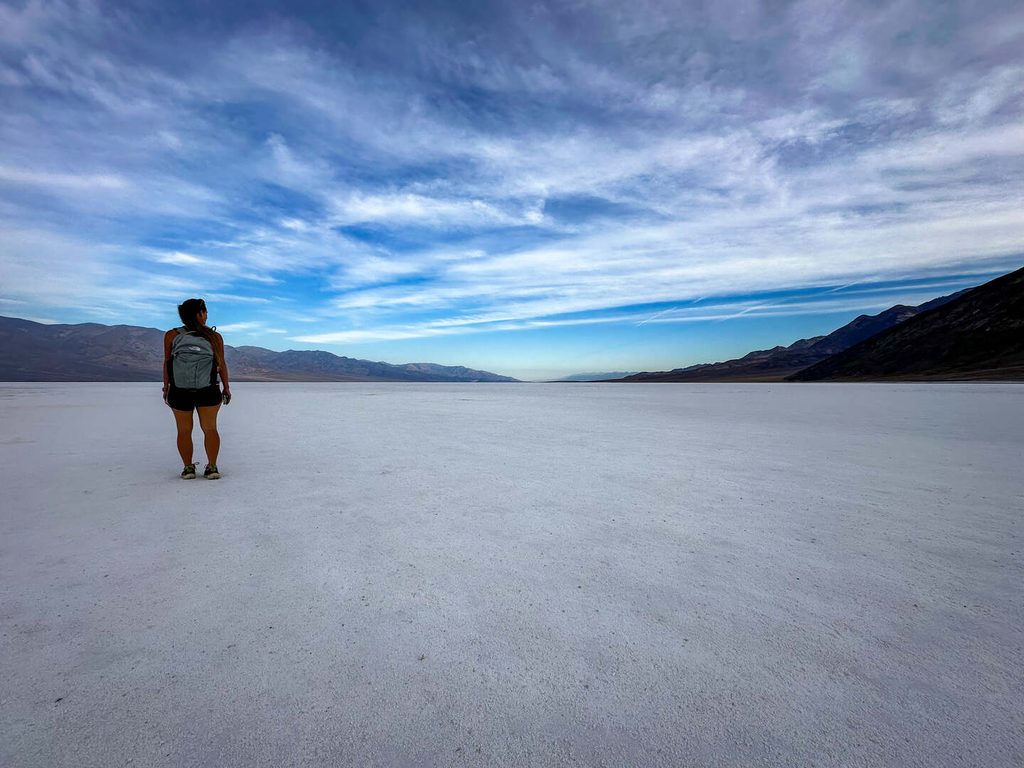
Let’s start off with one of the most fun things to do in the park. Going below sea level! The lowest point in North America, at 282 feet below sea level, is right here, and you definitely can’t skip that, right?! The Badwater Basin salt flats are literally like being on another planet!
Drive yourself to the Badwater Basin Overlook and go exploring. You can even walk out onto the salt flats as far as you want. Just note that once the sun comes up, it will warm up quickly. Hiking is not advised after 10 am if you are visiting in the summer.
After your trip out on the salt flats, be sure to stop by Devil’s Golf Course after this. This section of Badwater Basin has been weathered away, with many large pits in the salt. It’s a short drive and scenic stop with no hiking required.
Natural Bridge
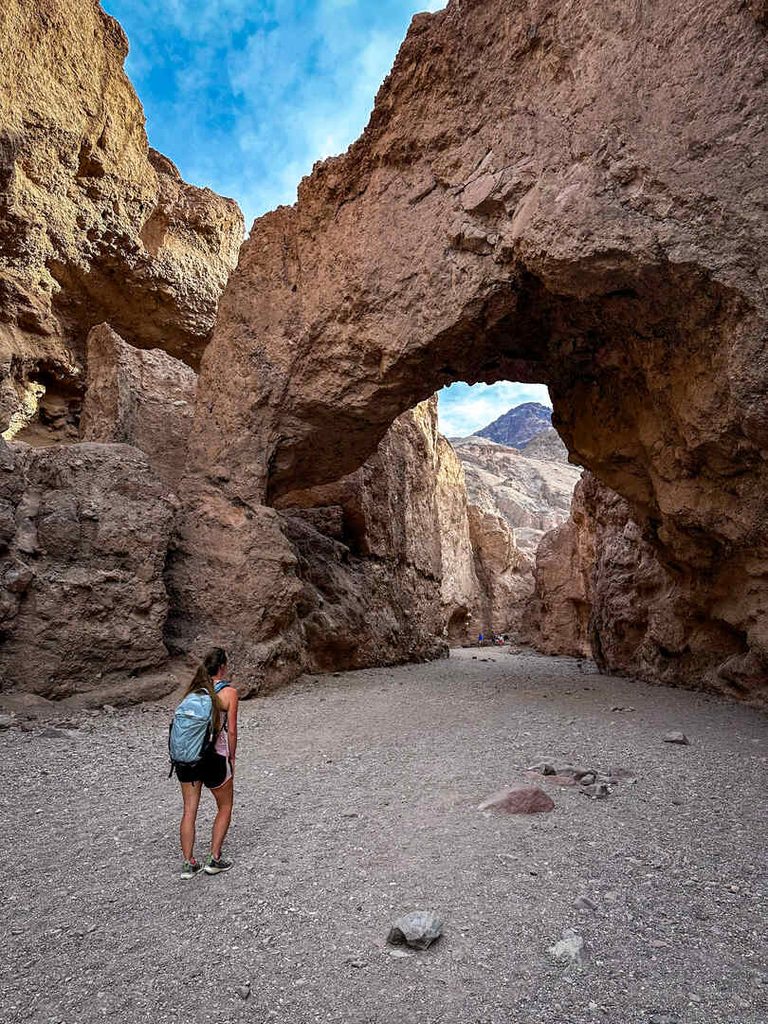
Now it’s time for a short hike up a slot canyon! This is a short 1.5 mile out and back hike to a very cool natural bridge. With just over 450 feet of elevation gain, you’re going to feel it here as you walk through the loose gravel and sand. Take it slow and take plenty of water.
As you reach the bridge, walk under it to reach the end of the trail at a dry waterfall. Then, make your way back to the parking lot. As you walk back, you’ll get some really cool views of Badwater Basin.
Artist’s Palette
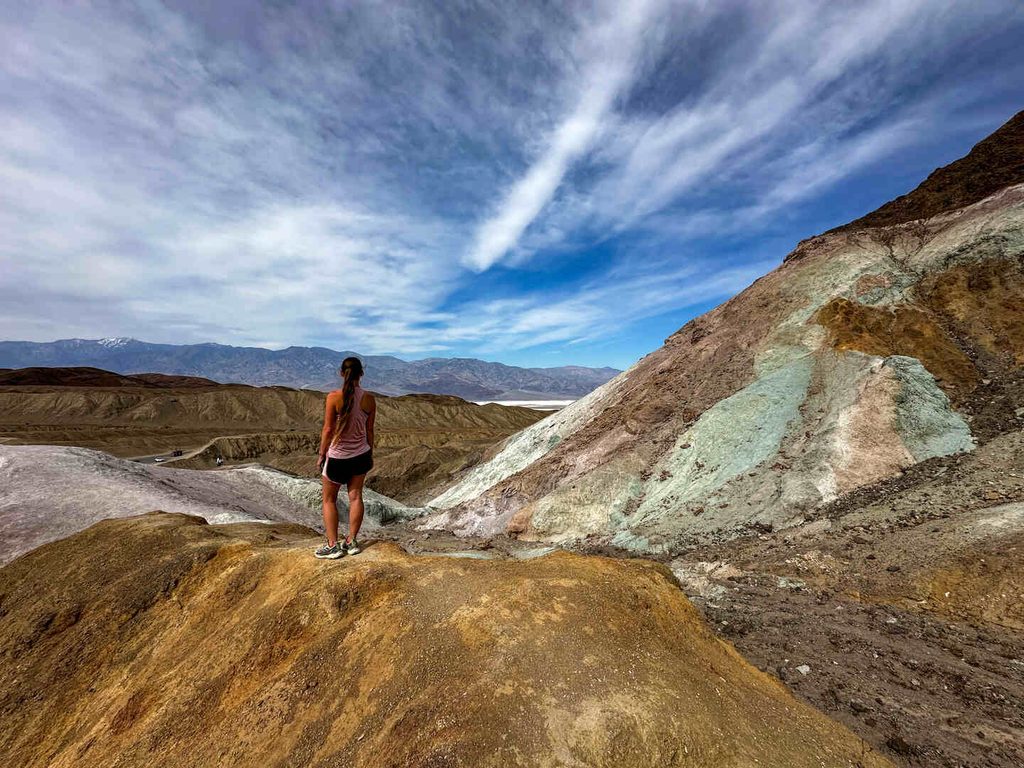
You have likely seen plenty of photos of this area of the park, and it’s another great stop on your first day exploring. Located just north of Badwater Basin and the Natural Bridge, this is another perfect stop during your Death Valley National Park itinerary.
Drive the road to the parking lot and set out to explore the colorful hills. The colors come from the volcanic deposits that are rich in minerals, causing the colors that you see. As you drive the loop road, enjoy the scenery, but be cautious around the sharp corners and turns.
Desolation Canyon
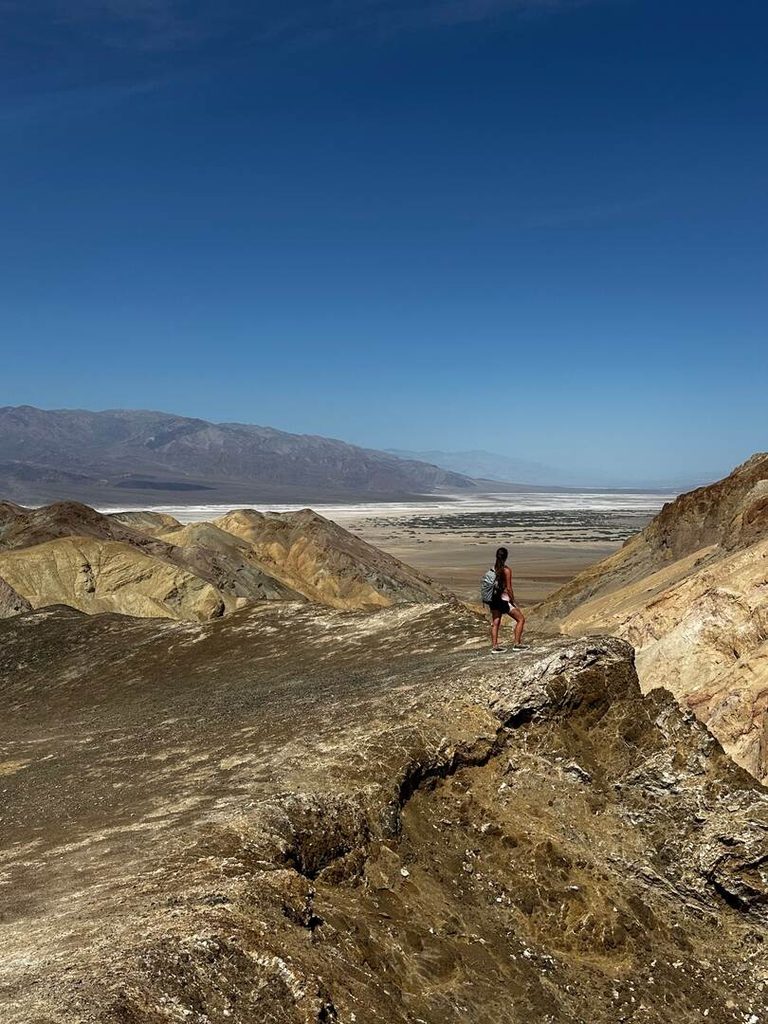
Just north of Artist’s Palette is Desolation Canyon. If you are looking for a somewhat longer hike, this is a good one right nearby. At 3.7 miles out and back, this is an interesting hike through a canyon. This trail is somewhat less popular than others, so you might even have the trail to yourselves.
Gaining 787 feet in elevation, it is somewhat strenuous due to the heat, sun, and sandy trail. Along the trail, you will encounter two dry waterfalls that do require some scrambling.
Mesquite Flat Sand Dunes
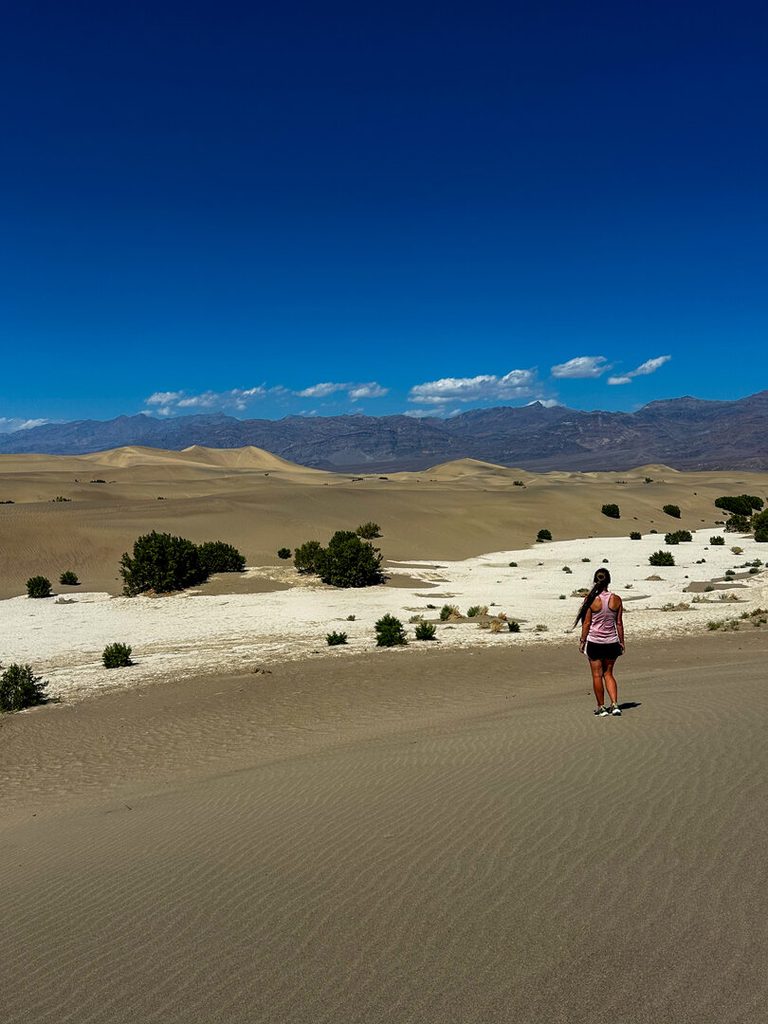
Now, this one is a bit optional for the day as it’s located a bit farther away from the attractions above. However, you could stop at Furnace Creek and then make your way to the Mesquite Flat Sand Dunes to finish up your first day at Death Valley National Park.
The sand dunes here are named after the mesquite tree, which grows throughout the dunes. Even though the park is full of sand, this is one of the areas in which you’ll find traditional sand dunes. You can walk out and explore and even go sand sledding if you have the proper gear.
Unlike White Sands National Park, there is nowhere to rent a sand sled for the day in Death Valley.
We visited this location in the early afternoon, and it was very hot! Even though the highs were in the mid-80s, the sun and sand made it extra hot and dry. Take plenty of water!
Day 3 – Golden Canyon, Zabriskie Point, Dante’s View, Salt Creek Trail, Rhyolite Ghost Town
Day 3 at Death Valley National Park is another full day of exploration in the park. We recommend completing one of the coolest and most fun hikes in Death Valley, Golden Canyon to Red Cathedral and Zabriskie Point and back.
Then, follow it up with an easy trail along the Salt Creek before heading back toward Beatty with a stop at the Rhyolite Ghost Town.
🛌🏽 Looking for a high-end place to stay right in the park? The Inn at Death Valley is the perfect spot.
Golden Canyon, Red Cathedral, and Zabriskie Point
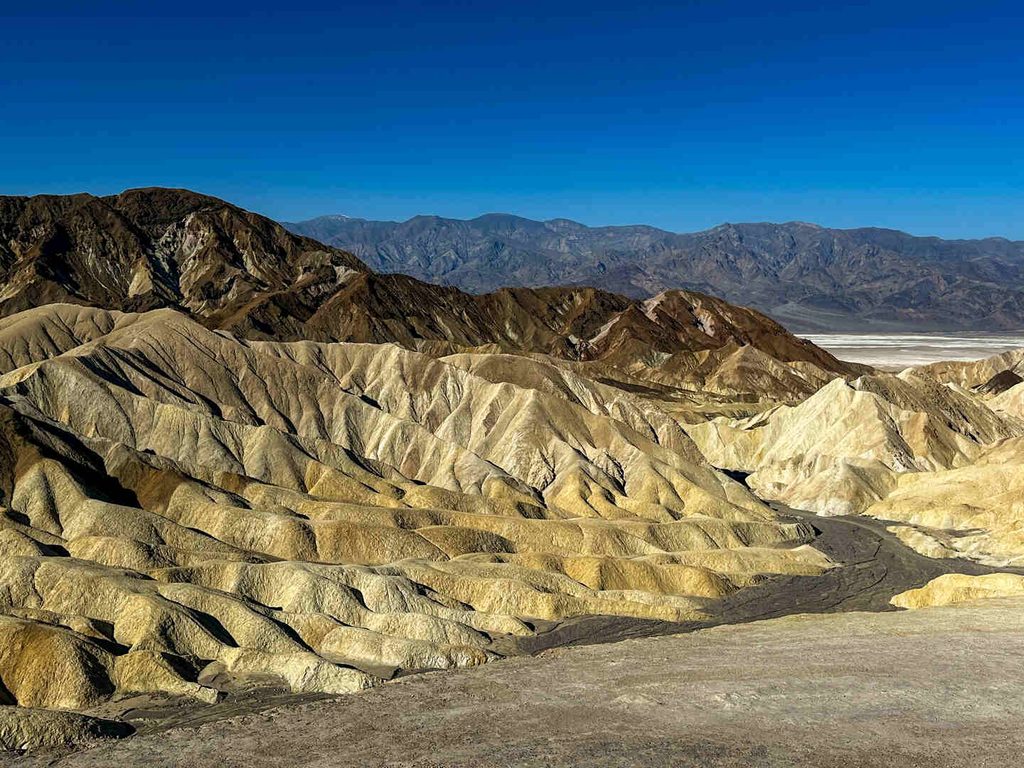
This is hands down our favorite hike in Death Valley National Park. The out-and-back hike uses multiple trails to visit some of the park’s best attractions, including Red Cathedral and Zabriskie Point. For this one, we recommend downloading AllTrails or our favorite, HikingProject.
This loop starts at the Golden Canyon Trailhead and will first take you to the massive towering red rocks at Red Cathedral. This section of the loop is about 3 miles out and back to the parking lot, but you’ll only be hiking about 2 miles to Red Cathedral, followed by a turnoff at the next trail to Zabriskie Point.
Take the trail toward Zabriskie Point for some of the most epic views in the park! No, really, it’s so cool! This section is about 2 miles with some steep elevation gain. You’ll end right at the short trail to the Zabriskie Point Overlook.
From there, retrace your steps about 3 miles back to the Golden Canyon parking lot. In all, this out-and-back hike is about 7 miles with approximately 1,000+ feet of elevation gain. Honestly, this hike was beautiful, but VERY windy. So windy that we almost got knocked over and constantly had sand blowing in our eyes. Bring goggles. 😆
Dante’s View
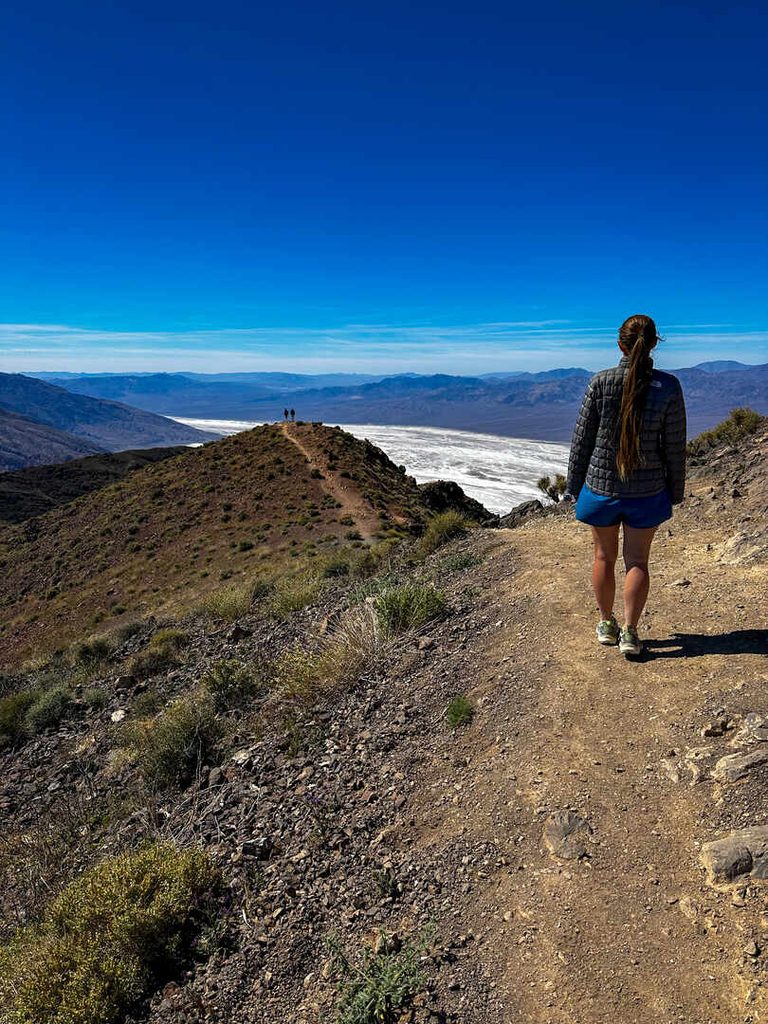
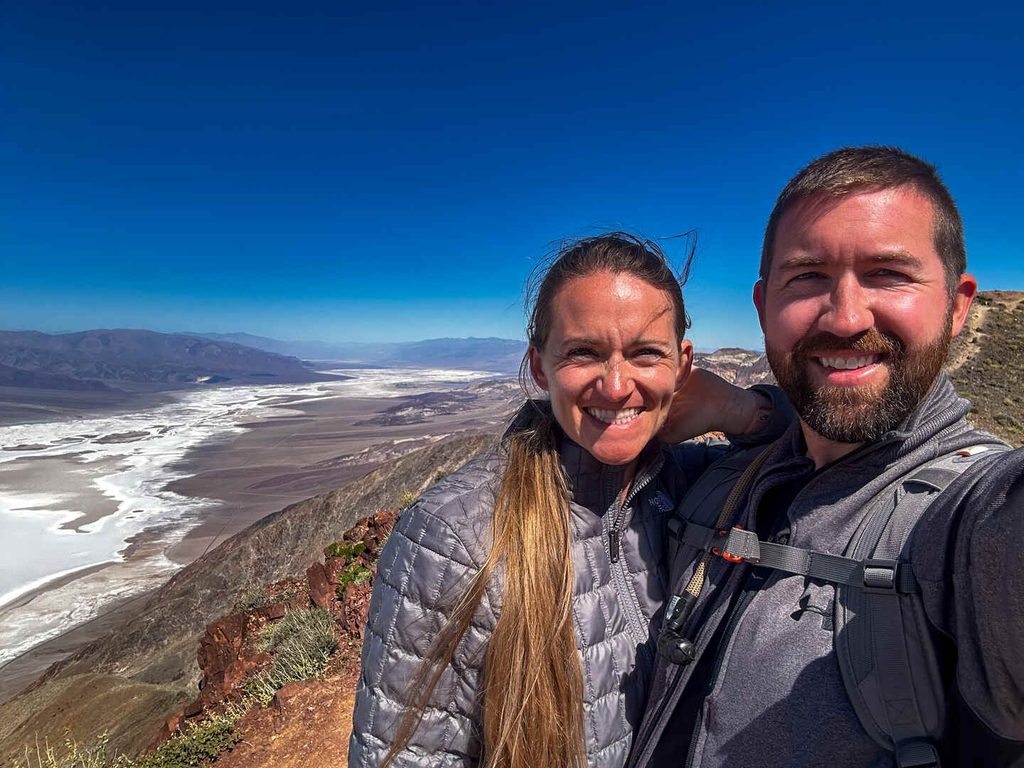
After your somewhat strenuous morning hike, it’s time to take a scenic drive up to one of the best views of Death Valley, Dante’s View. Standing at an elevation of nearly 5,500 feet, this dramatic overlook delivers an incredible sense of scale that makes you feel as though you are standing at the very edge of the earth.
Directly below your feet, the contrasting bright white salt crusts of Badwater Basin spread out across the desert floor like a frozen, shimmering ocean. It’s cold in the spring, so bring your coat!
Additionally, this is one of the coolest spots in the park to watch the sunset. Plus, when the sun goes down, a new show starts! If you time your visit during a new moon, the Milky Way and stars will be in full view, and it will be epic!
Salt Creek Interpretive Trail
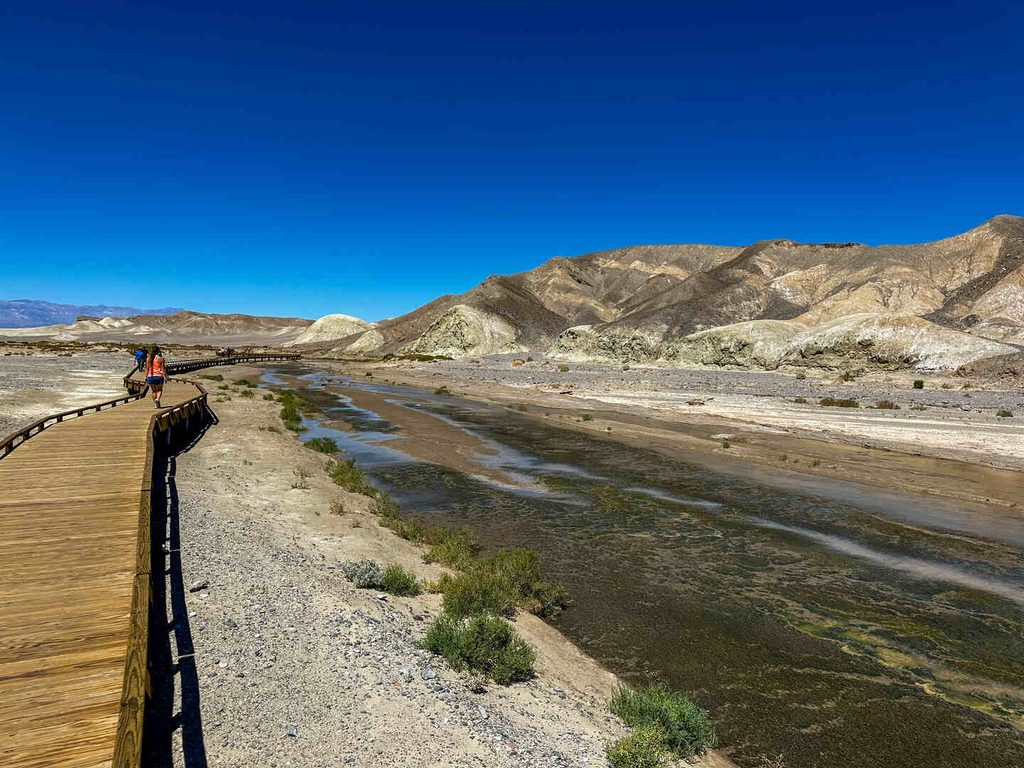
After your hike through Golden Canyon, we recommend heading to the Furnace Creek Visitor Center if you haven’t been there yet. This is a great time to refill your water and take a rest as needed.
After that, head to Salt Creek. This is a short 0.8-mile loop that follows a boardwalk above Salt Creek. As you walk the boardwalk, you’ll notice that it’s a bit more green than the rest of Death Valley. A nice desert oasis.
Another really cool thing to see here is the pupfish! According to the National Park Service, “Pupfish enjoy a natural habitat that remains mostly untouched by human activity. With water salinity that can sometimes exceed that of seawater, they’ve adapted to thrive in extreme conditions! Salt Creek Pupfish are slender and usually less than 3 inches long, displaying stunning blue hues in males and beautiful silvery brown in females.”
The pupfish were so much fun to watch as they swam around in the creek below us. Don’t miss this short trail because it was really cool!
Rhyolite Ghost Town
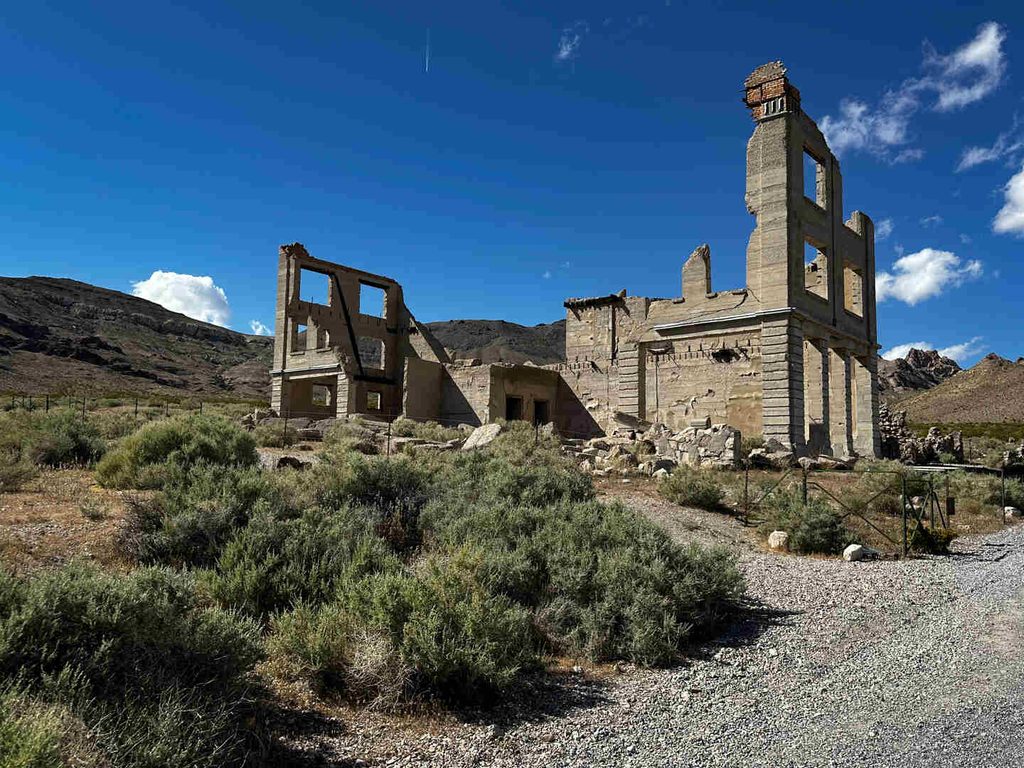
Finally, stop in Rhyolite if you have time! This town started growing in 1904 after prospectors struck gold near Death Valley. It quickly grew into a bustling town of thousands, complete with electric lights, hotels, and dozens of saloons.
However, it was short-lived. Gold vanished as quickly as it arrived, and by 1920, the town was completely abandoned, leaving behind the Cook Bank Building, a house built entirely from 50,000 old bottles, and more.
Today, you can visit the ruins of the town and walk around to learn about its history. Drive to the end of the road and park near the old train station to start your adventure there.
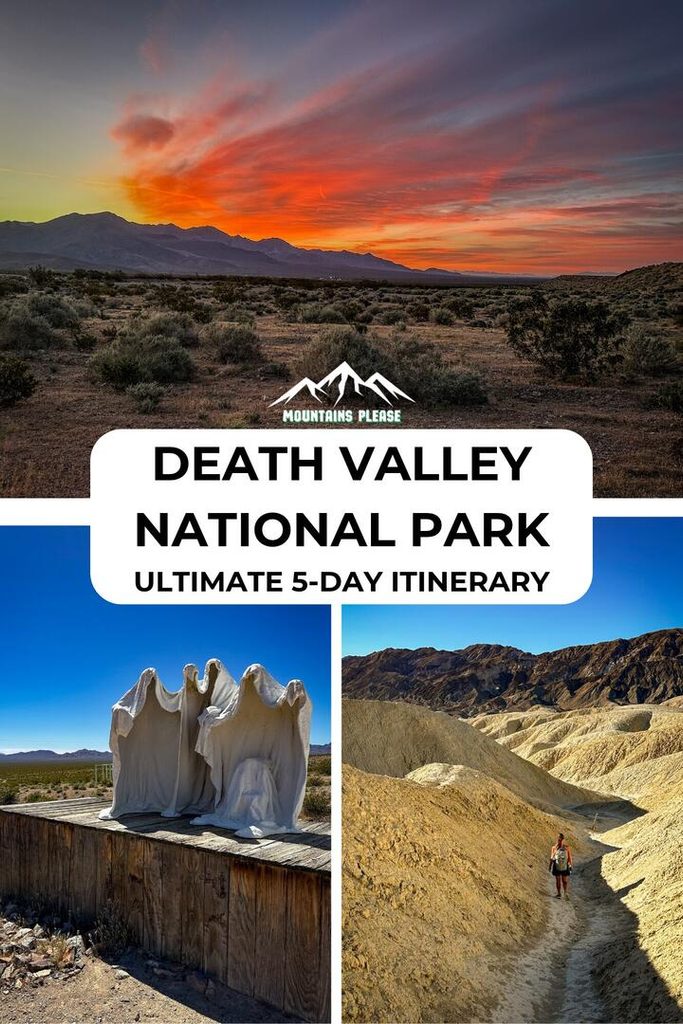
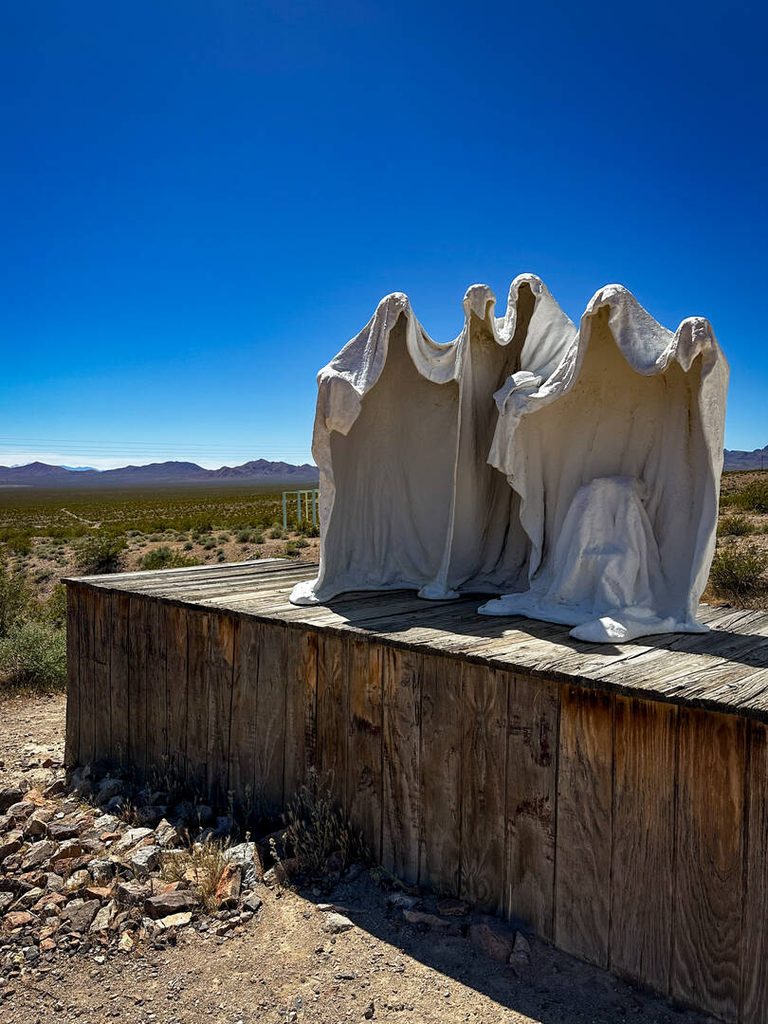
Additionally, right near the ruins sits the Goldwell Open Air Museum, an outdoor sculpture park created by Belgian artists in the 1980s. Its centerpiece is The Last Supper, a haunting collection of ghostly, life-sized plaster figures that look like they are floating against the empty desert backdrop.
To get the best lighting on The Last Supper, we recommend visiting in the early morning hours when the sun is behind you, or for dramatic scenery, visit at sunset. We did not plan our time here very well, and getting pictures was hard in the bright sun!
Day 4 – Ubehebe Crater and Mosaic Canyon
Your final day before starting to travel back to the airport includes a visit to Ubehebe Crater and a short hike up Mosaic Canyon.
Ubehebe Crater
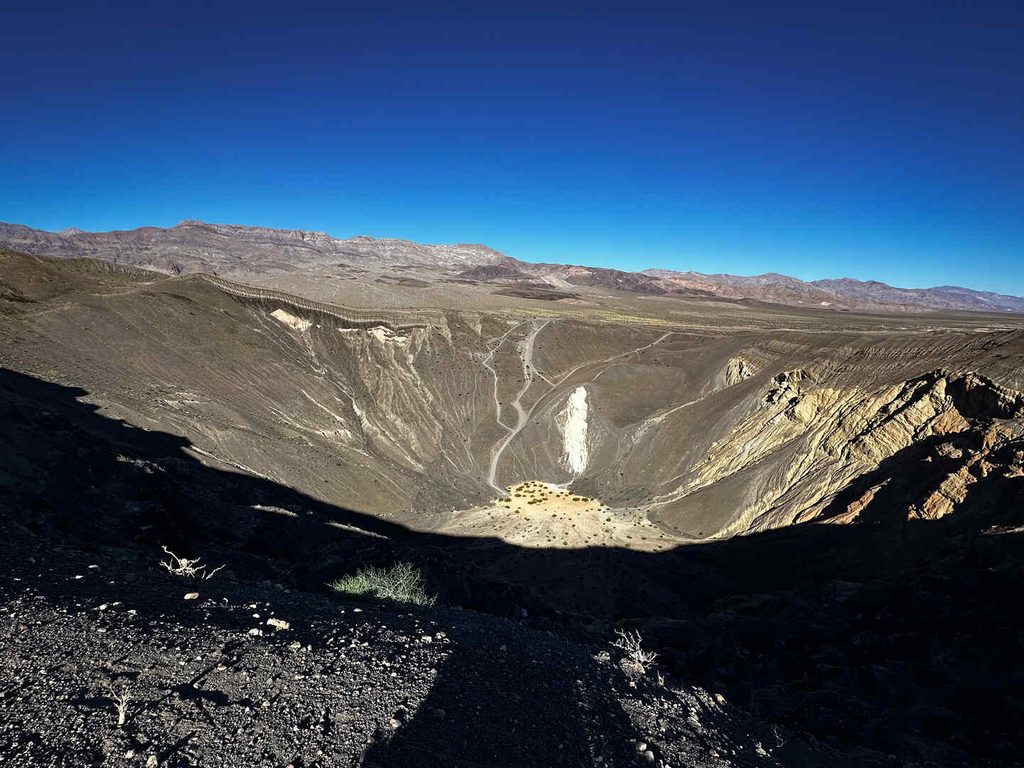
First up, this place is super cool! However, it’s about an hour-long drive from Beatty or Furnace Creek. The drive is part of the adventure as you make your way through the vast desert. There are no services out here, but you can stop at the Grapevine Ranger Station, which is just before the crater.
Keep in mind, the Grapevine Ranger Station is the last place to use the restroom, so be sure to stop here before continuing on to Ubehebe Crater. We arrived early in the morning, and the building was closed, but the restrooms were open.
Finally, we reached the crater! Ubehebe Crater is 600 feet deep and half a mile across! This crater was not created by an asteroid, but was created by steam and gas explosions. Here, intense heat flashed the water into steam, which expanded until the pressure was released as a tremendous explosion, creating the crater.
Here you have the option to hike around the rim of the crater, and you can even go down into the crater itself if you are feeling up for it. Beware that doing so is very steep, and it’s likely going to be very hot!
We chose to hike 2 miles around the rim of the crater only, and it was awesome! Note here that you’ll be hiking on gravel and sand, so certain areas are slow-going. Watch your footing at the edge of the crater, too.
Mosaic Canyon
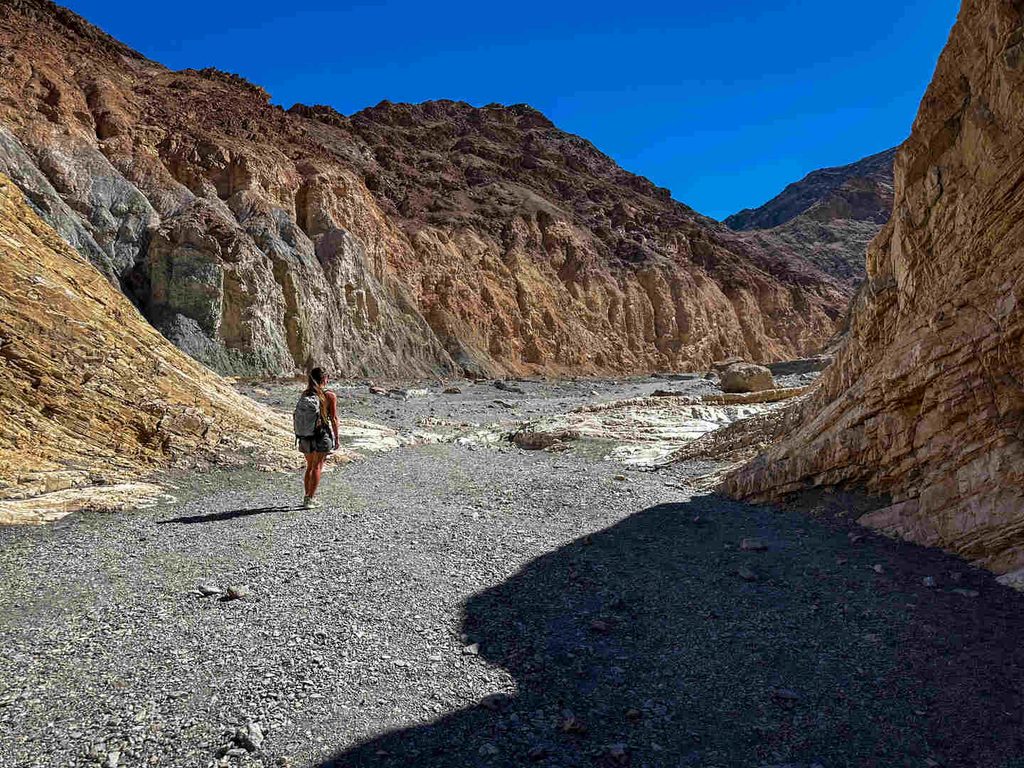
Mosaic Canyon is a perfect last hike in Death Valley. This is a 4 mile round trip out and back hike through a white marble canyon. The hike starts through a narrow canyon, but as you hike, the walls widen, and the view opens up.
If you are feeling adventurous, there are a few dry falls on the hike that you can climb to continue all the way to the end of the trail. While hiking, be on the lookout for Mosaic Breccia, which is naturally cemented rock fragments that look like stained glass or mosaics. This is what the canyon is named for.
The hike ends right in front of a 25 ft dryfall. Turn around here and retrace your steps to the parking lot. Take plenty of water on this hike because it will be hot and there is very little to no shade.
After completing this hike, we recommend heading toward your departure airport. For us, we headed back to Las Vegas to get ready to fly out the next day. Additionally, you could extend your spring break trip with another adventure in Joshua Tree National Park.
Death Valley National Park: Where To Stay
When planning your Death Valley National Park itinerary, there are limited options and accommodations. We recommend staying in either Beatty, NV, just outside the park, or Furnace Creek/Stovepipe Wells, where all the action starts.
Staying inside the park at Furnace Creek or Stovepipe Wells will cost you more, but you do also save some drive time each morning. We stayed in Beatty, NV, and it worked out great. Pick the best for your budget and convenience. Here are the best options:
- Stovepipe Wells Village Hotel – stay inside the park with a pool, restaurant, and proximity to Mesquite Flat Sand Dunes and Mosaic Canyon. Book your stay on Expedia.
- The Ranch at Death Valley – another great place to stay inside the park near Furnace Creek. Get an early start right near the trails, along with an outdoor pool, restaurant, and breakfast for a fee. Choose from rooms and cute cottages. Reserve your stay now.
- The Inn at Death Valley – Luxury, right inside the park. Complete with a pool, poolside bar, terrace, and shopping. Dine at the on-site restaurant and purchase a great breakfast to start your day each morning. Super close to Badwater Basin! Check out the options on Expedia.
- VRBO – Pick a place near Death Valley National Park. Options are limited! Find a place to stay now.
Frequently Asked Questions
How many days do you need at Death Valley National Park?
Three full days of exploration is our recommendation, with 4 days total. This is enough time to cover Badwater Basin, Natural Bridge, Artist’s Palette, the Golden Canyon to Zabriskie Point hike, Dante’s View, Salt Creek, Rhyolite Ghost Town, Ubehebe Crater, and Mosaic Canyon without feeling rushed. Add a travel day on each end, and you’re looking at a 5-day trip total. If you only have 2 days, prioritize Badwater Basin first thing in the morning on Day 1 and Golden Canyon to Zabriskie Point on Day 2. Those two experiences capture the best of what Death Valley has to offer.
What is the best hike in Death Valley National Park?
Golden Canyon to Red Cathedral and Zabriskie Point is hands down the best. This 7-mile out-and-back hike combines two of the most dramatic destinations in the park into one outstanding morning. The towering red walls of Red Cathedral are genuinely jaw-dropping, and the views from Zabriskie Point at the end are some of the most epic in the entire park. Fair warning, though: it can be extraordinarily windy in the canyon. We almost got knocked over and spent most of the hike with sand blowing in our eyes. Bring goggles!
What is the best time of day to visit Badwater Basin?
Arrive at or just before sunrise. The lighting on the salt flats in the early morning is extraordinary, the temperatures are at their most manageable, and you’ll have the basin largely to yourself before the crowds arrive. Once the sun comes up fully, temperatures rise fast, and the white salt flats reflect the heat in every direction. The NPS advises against hiking after 10 am in summer, but even in spring and fall, an early start makes the experience significantly better. Don’t sleep in on Badwater Basin day.
Is Rhyolite Ghost Town worth visiting near Death Valley?
Absolutely! It’s one of those stops that catches visitors completely off guard. Rhyolite exploded from nothing to a town of thousands practically overnight after a gold strike in 1904, then collapsed just as fast when the gold ran out. By 1920, it was completely abandoned. What’s left today is fascinating. Explore the ruins of the Cook Bank Building, a house built from 50,000 glass bottles, and right next door, the Goldwell Open Air Museum with its haunting outdoor sculpture installation of The Last Supper. Visit early in the morning or at sunset for the best light on the sculptures. We got our timing wrong and spent the whole visit squinting into bright sun. Plan better than we did!
Can you visit both Death Valley and Joshua Tree on the same trip?
Yes, and we highly recommend it. The two parks complement each other beautifully and are about 4 hours apart, making them a natural pairing for a spring break road trip. We actually traveled directly from Joshua Tree to Death Valley on our trip, stocking up on groceries and supplies before heading into the more remote terrain. Joshua Tree first, Death Valley second is our recommended order. This way, you’ll ease yourself into the desert experience gradually before delivering Death Valley’s more extreme and dramatic landscapes as the grand finale.
A Trip To Death Valley National Park Is Worth It, Right?
This national park is seriously underrated! We loved our time here, and a trip to Death Valley is definitely worth it. The landscape is totally different than any other national park we have been to. Our favorite things were exploring Badwater Basin and hiking through Golden Canyon.
One thing to note is that this park is huge! We packed quite a bit of activities into our few days spent here, but we could have easily spent a week here exploring other areas of the park, such as Telescope Peak and Panamint Springs.
Spring was the perfect time to visit, in our opinion. The park was busy, but nothing like the crowds we have seen at Yosemite. We can say with 100% certainty: put this national park on your bucket list!
We know that your Death Valley National Park itinerary may look a bit different, but we hope this helps in planning your trip to one of the best national parks we have been to!
🛌🏽 Don’t forget to check out Expedia and book your hotels, and if you like this itinerary, check out some of our other ones here!
Don’t forget to pin this post for future planning! Just click the save button located on any image.